

AI in Editorial: Practical Strategies for Smarter Content Creation
If you are reading this, you have likely already seen how artificial intelligence is reshaping the publishing landscape. The challenge no longer lies in whether to use AI, but how to integrate it effectively without sacrificing the quality or authenticity that defines a reputable magazine.
For editorial teams, the pressure to produce high-quality, engaging content at digital speed has never been greater. According to a recent industry guide, producing overwhelming speed and high-quality content has become a necessity for staying competitive.
This article explores how magazine publishers can practically apply AI tools to streamline workflows, boost creativity, and maintain brand integrity.
Why AI is No Longer Optional for Publishers
The shift from print to digital has fundamentally changed audience expectations. Readers want fresh, personalized, and interactive content continuously. Meeting this demand with traditional manual processes creates bottlenecks.
AI excels at removing these bottlenecks. By automating routine tasks, AI gives writers and editors back their most valuable asset: time. As one publication noted, the aim is to automate the mundane to liberate human creativity.
Practical Applications: From Ideation to Publication
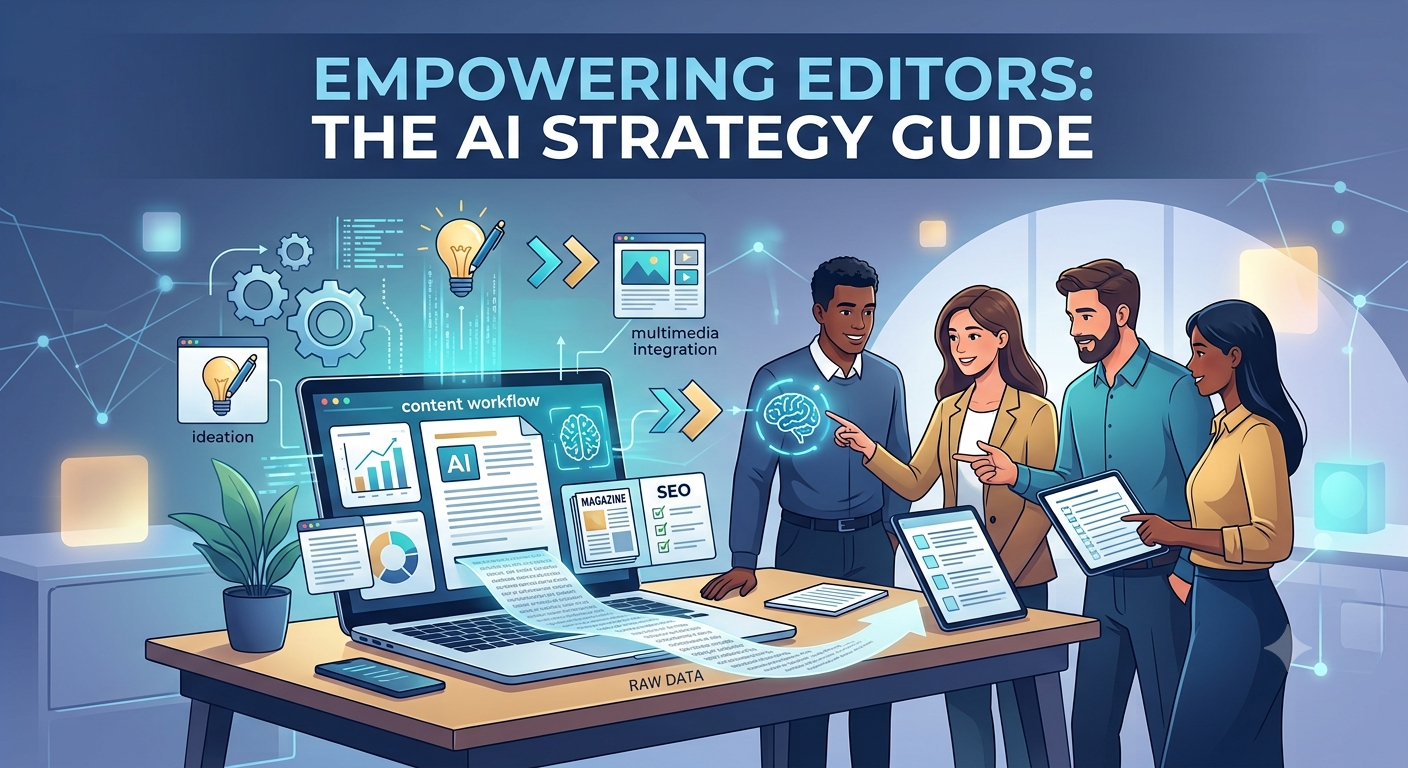
So, where does AI actually fit in a magazine’s workflow? Here are three areas where the impact is immediate.
1. Automated Content Generation and Summarization
One of the most common uses of AI is creating first drafts or summarising lengthy reports. AI tools can help with everything from generating article outlines based on a few keywords to producing standardised content like product descriptions or short news blasts.
This doesn’t mean replacing journalists. Instead, it is about handling heavy lifting so the editorial team can spend more time on in-depth analysis, interviews, and narrative crafting. For example, a tool like Kixa, developed by IBM iX, allows editors to “work up to 75% faster, freeing up time for creative work and strategic planning”.
2. SEO Optimization and Content Structuring
In the age of generative search, how you structure your content is just as important as the words themselves. AI can assist in analyzing keyword data and suggesting optimal headlines and subheadings.
Research indicates that AI citation favors clarity over cleverness. While a human might enjoy a pun, “AI doesn’t interpret metaphors”. Instead, search engines prioritize descriptive titles that clearly state the topic.
3. Multimedia and Interactive Content
Modern magazines aren’t just text. AI-powered magazine builders now allow users to create interactive digital publications with embedded videos, audio, and animations.
By entering a text prompt or uploading a file, tools can “analyzes the supplied information, generates a structured outline, and then creates the layout and pages”. This reduces the time spent on technical design, allowing more focus on the visual story.
Writing for the Algorithm (Without Losing Your Voice)
To ensure your AI-assisted content performs well in search, it is crucial to follow best practices for how AI indexes content. Think of your structure as a map for the algorithm.
Headline Structure Matters. AI models scan your page structure. The Title (H1) is the primary signal, while subheadings (H2, H3) define the topics. According to a study by Wallabee, articles with numbers in the title (e.g., “5 Tips for...”) are cited more often in AI search results, particularly for comparative prompts.
Consistency is Key. There must be alignment between your Title Tag, H1, and the opening paragraph. If your title promises an “Enterprise SEO Framework,” but the page discusses basic keyword research, the AI gets confused. This alignment helps ensure platforms can reliably categorize and cite your content.
Descriptive Subheadings. Instead of vague H2s like “The Big Picture,” use descriptive phrases like “How to Structure H2 Headings for AI Visibility.” This signals to the AI exactly what the section covers.
The Bottom Line
The goal of integrating AI into a magazine’s workflow is not to replace the human element but to enhance it. By using AI to handle repetitive administrative and technical tasks, editorial teams can focus on strategic storytelling and building deeper connections with their audience.
The future of publishing belongs to those who can leverage the speed of AI without losing the soul of good journalism.